I've yet to research this, but in therapy yesterday I came across an interesting insight into my thought and language process: sometimes, when I want to recall something I want to share, I need to go "the long way" through a series of steps that get me to the point.
For example, J asked, "Tell me again what that idea [you shared yesterday] about the weekend was?"
In order to tell him, I will think and say something like, "So, as I was telling you yesterday, because I have been feeling lately that we aren't getting enough exercise, I was thinking about maybe this weekend going bike riding".
This is a theoretical example (and may be understating the way I do this), but it does convey something about my speech and thought process. I actually need to start where I started, and reiterate the thought in almost the same way I shared it before. If I don't do this, I can experience a kind of "speech impotence" where I just. can't. get. words. out.
From the point of view of people with "normal" cognitive processes or speech abilities, I used a whole lot of extra words to take a long time to "get to the point". It may be entirely frustrating to listen to me, with all my redundancies and circuitous speech.
Interestingly, I can be more "clear" with the lights off, and with some grounding physical contact. I've noticed that some people with AS close their eyes when they speak. This could be an adaptive strategy to reduce input. As annoying as it is to listen to someone who has their eyes closed and therefore is taking in no information about their listener(s), I can see how it'd be useful if the words just aren't coming as fluidly as I wish.
I'm not sure what this circuitous language process is called, but my therapist said she has known other people who do this kind of thing, and at this point, I can't change it but can develop strategies to deal with it. In the meantime, I hope the people around me continue to have patience as I take "the long way".
Tuesday, October 5, 2010

Monday, October 4, 2010
Everyday Needs
Many peers have written about the sheer exhaustion of being out in the world every day. With autism, the demands of social interaction, modulating sensory input, and the extra work to decipher and integrate all of it can leave us collapsed and overloaded at the end of the day.
Ultimately, I am seeing how important it is to make choices, set limits, and give myself permission to pace myself.
I have an everyday need, for instance, to shut out the world at the end of the day, to turn off the lights and wrap myself in a blanket. To completely relax. The tougher the day, the more this is necessary. Like each activity or environment I encounter has a certain "debt" level. Some things incur little energetic debt, like going for a hike (in fact this can be beneficial to integration and renewal). A movie on opening night incurs a lot of debt. So does work as a cashier. So does trivia night at the bar.
I choose to not limit myself. I prefer a movie not on opening night, but if my husband really wants to see it and it's opening night, I'll gauge how prepared I am to deal with it, and will often go. I'll sit near the front to minimize the number of illuminated cell phones and other movement in my field of vision.
I'm working on getting parts of my life together related to executive functioning, and am going to be working with a social work student intern on day to day living. I have to be mindful of how much debt I'm incurring, so that I can focus on building skills. It means a bit more isolation than I'd like, but I have to spend my energy wisely.
Ultimately, I am seeing how important it is to make choices, set limits, and give myself permission to pace myself.
I have an everyday need, for instance, to shut out the world at the end of the day, to turn off the lights and wrap myself in a blanket. To completely relax. The tougher the day, the more this is necessary. Like each activity or environment I encounter has a certain "debt" level. Some things incur little energetic debt, like going for a hike (in fact this can be beneficial to integration and renewal). A movie on opening night incurs a lot of debt. So does work as a cashier. So does trivia night at the bar.
I choose to not limit myself. I prefer a movie not on opening night, but if my husband really wants to see it and it's opening night, I'll gauge how prepared I am to deal with it, and will often go. I'll sit near the front to minimize the number of illuminated cell phones and other movement in my field of vision.
I'm working on getting parts of my life together related to executive functioning, and am going to be working with a social work student intern on day to day living. I have to be mindful of how much debt I'm incurring, so that I can focus on building skills. It means a bit more isolation than I'd like, but I have to spend my energy wisely.
Sunday, October 3, 2010
Conversational Much?
I realized after the last few posts I did which garnered comments, that this medium isn't much different from my face to face interactions, in that I have a hard time reciprocating. This isn't 100%, I sometimes do have back and forth conversations with people, but usually I don't.

This is social pragmatic language, and I was recently assessed as having weakness in this area.
When the Autism Women's Network posted my profile mid-September, as part of their Pepsi Refresh campaign (go vote for them!) I got a lot of comments and I didn't respond to any of them. I feel bad about that. But I was overwhelmed. Sometimes when I do respond I feel like my responses are like.. cardboard? Dry and awkwardly bent.
Thursday, September 30, 2010
Shameless Plug

Parents, fishbowls, and sledgehammers
I attended and presented at the AANE Making Connections conference. The audience consisted of adults with AS, family of adults and children, and professionals.
 The conference included a lot of interesting stuff. I attended a talk by neuroscientist John Gabrieli from MIT, who talked about some of what they've discovered about autism and the brain, what fMRI studied do and do not tell us about brain activation, and some results of specific studies. He talked briefly about one study that I participated in, but there haven't been enough participants to provide data. (If you are able to go to MIT to participate in fMRI studies, do it! You get paid and it's a couple of hours of work and sensory stress, but it's otherwise painless.)
I also participated on a panel called "Dating and Relationships". It was interesting participating. I shared my experiences. Another couple was also on the panel. It was a good experience. A lot of the questions from the audience were people asking specific advice about dating and issues for people with AS. Like how to approach dating, how to tell when someone isn't interested, or is interested, and how to make decisions regarding relationships. I am told I answered some of the questions well, so that was positive :)
I also chatted with a mom of a tween girl who was interested to hear about my experiences growing up. I have talked with parents before. In general they are anxious about how growing up will be for their daughter, and what the possibilities are. They want to hear about my experiences of university, and working, and relationships. I try to tell about both positives and challenges. About how I experience the world. My opinion that much of the challenge in autistic spectrum is at its root, about sensory processing.
My encounters with parents, in other words, have been generally positive. I think I can tell where they're coming from, their motivation to help their child, and wanting to hear from an adult who 'made it through' the child and adolescent and young adult phase. I think I present the "right mix" of hope and struggle, at least for parents of kids with the Aspergers label. Like, hey, my executive functioning is in the toilet, I have expressive/pragmatic language difficulties, experience overload, have an auditory processing disorder, and have rewarding relationships but am challenged by some aspects of that. I guess, though, I function in the world. More or less.
 On the flipside, I also experienced a kind of "fishbowl" effect at the conference. Lunch tables had signs on them, which allowed people from different groups to connect -- families, professionals, adults with AS. I sat at one of the latter tables. At one point, a man and his sister came over to sit down, and she did not have AS. At first it seemed like not a problem but then she started asking questions of some of us. Maybe her brother doesn't live independently but she started asking one fellow questions and seemed very surprised that he lived on his own in an apartment. Then she started grilling another woman at the table. An acquaintance of mine took exception to this and said very assertively that she was uncomfortable with how this woman was acting at a table that is clearly labeled as being for adults on the spectrum, that her presence is being tolerated, but the way she's treating us isn't nice.
My non-confrontational-avoidant side kicked into full gear and I stayed silent. I saw my friend's point. It made me really uncomfortable. That, combined with people mulling around with their plate of food, figuring out where to sit and seeing the "Adults on the Spectrum" sign on our table and shooting looks at us that were discomforting. Actually my friend saw them more than I did, because I wasn't looking (in my usual obliviousness combined with already being overloaded).
In the buffet line, my friend and I were chatting about various things and some of the ladies in line (not spectrum) were giggling, I think because they found what we were saying funny. It was funny. This made me a bit proud; we tend to have a quirky, ironic sense of humour.
But the fishbowl feeling was very striking; it's like we as adults with ASD were specimens, or objects of inquiry. It was like the joke about people with ASDs disappearing when they reach 18. We were suddenly there, in the faces of the people who think about kids with ASDs all day long, and used to encountering ASDs in children with a child (accented with the influence of ASD) understanding of the world. Here are full-grown adults. It's like they have no framework for us.
So I can somewhat understand the staring. My tendency is to want to reach out and make those looks an inquiry, understand them as a hesitation to ask, but coming from a desire to learn, rather than a derision, skepticism, or scorn. I want to provide a framework for adults where none exists.
Maybe I haven't experienced the lash of parental invalidation enough, the kind where they say you don't act like my son/daughter, you make eye contact, you don't seem ASD enough therefore you can't speak about it. (see this video for a great account of emotions, "passing", and invalidation) At least I haven't experienced the last part of that. I have gotten "I wouldn't have guessed you have Aspergers".
My mental response to that is, well, okay, fair enough, because you don't see all the coiled up tension and anxiety and confusion and the way my friendships and marriages stumble, the way my mind works, the messiness of my house, the potential of my mind contrasted with where I've actually been able to get to.
So I haven't felt the need to use the "sledgehammer" with parents or other NT people* who don't live with ASD as a first-person experience. But I can understand why some of my peers have to wield the sledgehammer.
Which leads, I suppose, to another potential topic: Why I Have Hesitated to Protest
*I am aware that not all people who identify as parents or professionals first, are NT.
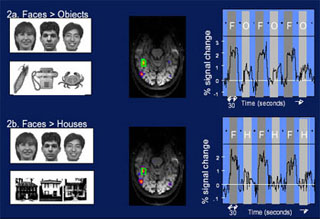 The conference included a lot of interesting stuff. I attended a talk by neuroscientist John Gabrieli from MIT, who talked about some of what they've discovered about autism and the brain, what fMRI studied do and do not tell us about brain activation, and some results of specific studies. He talked briefly about one study that I participated in, but there haven't been enough participants to provide data. (If you are able to go to MIT to participate in fMRI studies, do it! You get paid and it's a couple of hours of work and sensory stress, but it's otherwise painless.)
I also participated on a panel called "Dating and Relationships". It was interesting participating. I shared my experiences. Another couple was also on the panel. It was a good experience. A lot of the questions from the audience were people asking specific advice about dating and issues for people with AS. Like how to approach dating, how to tell when someone isn't interested, or is interested, and how to make decisions regarding relationships. I am told I answered some of the questions well, so that was positive :)
I also chatted with a mom of a tween girl who was interested to hear about my experiences growing up. I have talked with parents before. In general they are anxious about how growing up will be for their daughter, and what the possibilities are. They want to hear about my experiences of university, and working, and relationships. I try to tell about both positives and challenges. About how I experience the world. My opinion that much of the challenge in autistic spectrum is at its root, about sensory processing.
My encounters with parents, in other words, have been generally positive. I think I can tell where they're coming from, their motivation to help their child, and wanting to hear from an adult who 'made it through' the child and adolescent and young adult phase. I think I present the "right mix" of hope and struggle, at least for parents of kids with the Aspergers label. Like, hey, my executive functioning is in the toilet, I have expressive/pragmatic language difficulties, experience overload, have an auditory processing disorder, and have rewarding relationships but am challenged by some aspects of that. I guess, though, I function in the world. More or less.

My non-confrontational-avoidant side kicked into full gear and I stayed silent. I saw my friend's point. It made me really uncomfortable. That, combined with people mulling around with their plate of food, figuring out where to sit and seeing the "Adults on the Spectrum" sign on our table and shooting looks at us that were discomforting. Actually my friend saw them more than I did, because I wasn't looking (in my usual obliviousness combined with already being overloaded).
In the buffet line, my friend and I were chatting about various things and some of the ladies in line (not spectrum) were giggling, I think because they found what we were saying funny. It was funny. This made me a bit proud; we tend to have a quirky, ironic sense of humour.
 |
| from withinmybox.com |
So I can somewhat understand the staring. My tendency is to want to reach out and make those looks an inquiry, understand them as a hesitation to ask, but coming from a desire to learn, rather than a derision, skepticism, or scorn. I want to provide a framework for adults where none exists.
Maybe I haven't experienced the lash of parental invalidation enough, the kind where they say you don't act like my son/daughter, you make eye contact, you don't seem ASD enough therefore you can't speak about it. (see this video for a great account of emotions, "passing", and invalidation) At least I haven't experienced the last part of that. I have gotten "I wouldn't have guessed you have Aspergers".
My mental response to that is, well, okay, fair enough, because you don't see all the coiled up tension and anxiety and confusion and the way my friendships and marriages stumble, the way my mind works, the messiness of my house, the potential of my mind contrasted with where I've actually been able to get to.
So I haven't felt the need to use the "sledgehammer" with parents or other NT people* who don't live with ASD as a first-person experience. But I can understand why some of my peers have to wield the sledgehammer.
Which leads, I suppose, to another potential topic: Why I Have Hesitated to Protest
*I am aware that not all people who identify as parents or professionals first, are NT.
Wednesday, September 29, 2010
Overload and
This might be not so polished or coherent because I'm overloaded. Heh.
Maybe it's two separate posts that I need to write here. I'm starting with overload, but tagging along right behind that is overwhelm that I'm feeling about not understanding people.
Overload.
What does that even mean? Probably a lot of things. A state before meltdown. A feeling in my head. A scattered sensation. An exhaustion that is simultaneously 'wired' and an anxiety that makes my body feel heavy. It's all the senses all at once becoming a little more brash and difficult to handle. It's feeling trapped, whole body coiled like a wire. It's like drowning, being able to breathe still just by fighting but feeling like little by little something is slipping away. Like there is an edge I'm trickling towards.
That edge is a scary place. I used to think it was the edge of psychosis. I used to think that if I let myself relax, if I let go and stopped fighting the current I was feeling in my body and mind, if I didn't keep coiled up in every muscle of my body, I would go insane.
I admit, I have gone into states of regression when I've gone over that edge. Into places of non-language and vertigo, spinning word salad or feeling so scared and vulnerable that I feel like I'm 4. It is scary. Maybe some outside onlooker would see it as psychotic. But I think it's meltdown.
Meltdown is different for different people I suppose. Not everyone would describe it this way. But this is Karen-meltdown, not anyone else-meltdown.
Meltdowns for me are not tantrums. They may not be classic in any sense, at least from how they appear on the outside.
In overload, the senses are too much to bear. Everything hurts. I crave quiet, and darkness, and deep pressure, and warmth. In meltdown, things get all crossed and the senses don't process in their normal way, so the coherence in my mind is all messy and the world disappears from sight and touch and sometimes sound. Things don't make sense anymore.
Meltdowns happen rarely for me. I have great self control. I sometimes wish I didn't, because having it means suffering from overload, in silence. Like being in a constant state of feeling bombarded by the world.
This past Friday I went to a conference about Aspergers. I attended keynotes and panels, and even participated in one. I hung out with other adults on the spectrum, talked with a parent about .. 'stuff', asked a question, even, in front of the hundreds of people there. It took me two days (at least) to recover, and work these past two days have been really taxing.
Then at work today, it was just hitting me how much my interactions with people feel like they are happening between.. well, not a pane of glass. More like between us is 2 panes of glass, and in between those panes is a layer of water. Sometimes I can't hear the person well. Sometimes I can't make eye contact, or read their face because I have to look elsewhere. Then when I 'wake up' and I do look, I am faced with a whole crapload of emotions that I can't process. So I left work tonight and got home and J was asleep and I just cried. I feel like I could cry and cry because the world is overwhelming and I am sliding toward the edge, at any given moment maybe digging my fingernails into the ground a little more deeply, but still sliding...
I guess I'm still adjusting my understanding of it all. I'm still not at a place of acceptance with it all. I still fight against the overload instead of accepting my limits and respecting what I need to do to stay safe and integrated and grounded. And for that matter, I just don't exactly know what I need to do.
Maybe it's two separate posts that I need to write here. I'm starting with overload, but tagging along right behind that is overwhelm that I'm feeling about not understanding people.
Overload.
What does that even mean? Probably a lot of things. A state before meltdown. A feeling in my head. A scattered sensation. An exhaustion that is simultaneously 'wired' and an anxiety that makes my body feel heavy. It's all the senses all at once becoming a little more brash and difficult to handle. It's feeling trapped, whole body coiled like a wire. It's like drowning, being able to breathe still just by fighting but feeling like little by little something is slipping away. Like there is an edge I'm trickling towards.
That edge is a scary place. I used to think it was the edge of psychosis. I used to think that if I let myself relax, if I let go and stopped fighting the current I was feeling in my body and mind, if I didn't keep coiled up in every muscle of my body, I would go insane.
I admit, I have gone into states of regression when I've gone over that edge. Into places of non-language and vertigo, spinning word salad or feeling so scared and vulnerable that I feel like I'm 4. It is scary. Maybe some outside onlooker would see it as psychotic. But I think it's meltdown.
Meltdown is different for different people I suppose. Not everyone would describe it this way. But this is Karen-meltdown, not anyone else-meltdown.
Meltdowns for me are not tantrums. They may not be classic in any sense, at least from how they appear on the outside.
In overload, the senses are too much to bear. Everything hurts. I crave quiet, and darkness, and deep pressure, and warmth. In meltdown, things get all crossed and the senses don't process in their normal way, so the coherence in my mind is all messy and the world disappears from sight and touch and sometimes sound. Things don't make sense anymore.
Meltdowns happen rarely for me. I have great self control. I sometimes wish I didn't, because having it means suffering from overload, in silence. Like being in a constant state of feeling bombarded by the world.
This past Friday I went to a conference about Aspergers. I attended keynotes and panels, and even participated in one. I hung out with other adults on the spectrum, talked with a parent about .. 'stuff', asked a question, even, in front of the hundreds of people there. It took me two days (at least) to recover, and work these past two days have been really taxing.
Then at work today, it was just hitting me how much my interactions with people feel like they are happening between.. well, not a pane of glass. More like between us is 2 panes of glass, and in between those panes is a layer of water. Sometimes I can't hear the person well. Sometimes I can't make eye contact, or read their face because I have to look elsewhere. Then when I 'wake up' and I do look, I am faced with a whole crapload of emotions that I can't process. So I left work tonight and got home and J was asleep and I just cried. I feel like I could cry and cry because the world is overwhelming and I am sliding toward the edge, at any given moment maybe digging my fingernails into the ground a little more deeply, but still sliding...
I guess I'm still adjusting my understanding of it all. I'm still not at a place of acceptance with it all. I still fight against the overload instead of accepting my limits and respecting what I need to do to stay safe and integrated and grounded. And for that matter, I just don't exactly know what I need to do.
Tuesday, September 21, 2010
another step on the diag-onal
I now have had an OT assessment and speech therapy assessment. Both were quite brief insurance-purposes evaluations, but for a $20 co-pay, that's pretty darn good.
The OT came first. They confirmed that, as suspected, I have some sensory processing issues, mainly sensitivities, and that while auditory processing is a biggie, so is tactile defensiveness. We'd work on both of those if I did therapy. I haven't gotten the written evaluation. But, I did leave with a surgical brush to start the Willbarger protocol. It has to be done every two hours for two weeks, which is pretty demanding, but I am committed to it. I have set an alarm on my phone to go off that reminds me, but I sometimes turn off the alarm and space out for a while. I missed at least one session yesterday, and kind of one today, but I'm getting there... it's a tough thing to manage when one has executive functioning difficulties.
The speech evaluation was interesting. I have definite challenges with working memory and what is called 'social pragmatic' speech. That is, using speech in everyday conversation, perspective-taking, and understanding the meaning of non-verbal cues, tone of voice, etc. She'd also work on executive functioning with me.
Overall, the evaluations were helpful for clarifying some things.
The OT came first. They confirmed that, as suspected, I have some sensory processing issues, mainly sensitivities, and that while auditory processing is a biggie, so is tactile defensiveness. We'd work on both of those if I did therapy. I haven't gotten the written evaluation. But, I did leave with a surgical brush to start the Willbarger protocol. It has to be done every two hours for two weeks, which is pretty demanding, but I am committed to it. I have set an alarm on my phone to go off that reminds me, but I sometimes turn off the alarm and space out for a while. I missed at least one session yesterday, and kind of one today, but I'm getting there... it's a tough thing to manage when one has executive functioning difficulties.
The speech evaluation was interesting. I have definite challenges with working memory and what is called 'social pragmatic' speech. That is, using speech in everyday conversation, perspective-taking, and understanding the meaning of non-verbal cues, tone of voice, etc. She'd also work on executive functioning with me.
Overall, the evaluations were helpful for clarifying some things.
Subscribe to:
Posts (Atom)
Subscribe To


 Posts
All Comments
Posts
All Comments